A Three part series
A basement bedroom is one of the most valuable additions you can make to your home — it adds genuine living space, increases functional square footage, and can serve a different purpose depending on what your family needs. A guest suite for visiting family. A bedroom for a teenager who wants more independence. A flexible room that’s a playroom now and a bedroom later.
But a basement bedroom isn’t just a finished room with a bed in it — it has to meet code requirements that other rooms don’t, and getting those requirements right from day one prevents real headaches down the road. Here’s what you need to know, whatever the room ends up being used for.
Part 1: What Makes a Basement Room Legally a Bedroom

This is the part most homeowners don’t think about until it’s already a problem — usually when they go to sell the house and find out the “bedroom” they’ve been using for years was never permitted as one. If you want a basement room to count as a legal bedroom (which matters for resale value, appraisals, and simply being able to call it what it is), it has to meet specific building code requirements.
Egress Is Non-Negotiable
The single biggest code requirement for a basement bedroom is egress — a way for someone to escape the room in an emergency without going through the rest of the house, and a way for emergency responders to get in.
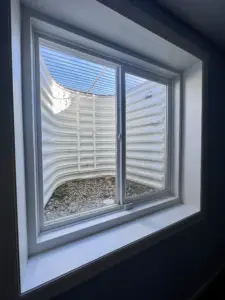
This typically means an egress window: a window large enough for a person to climb through, with a window well outside if the window sits below grade. Code requirements vary by jurisdiction, but generally an egress window needs:
- A minimum clear opening of about 5.7 square feet (5.0 square feet for ground-floor windows, but basement windows usually fall under the larger requirement)
- A minimum clear opening height of 24 inches and width of 20 inches
- A sill height no more than 44 inches from the floor
- If below grade, a window well with enough horizontal projection for a person to climb out, plus a permanent ladder or steps if the well is deeper than 44 inches
Skipping this step is the most common — and most consequential — mistake homeowners make when finishing a basement room. A room without proper egress can never legally be called a bedroom, no matter how nice it looks. We handle the egress window installation and coordinate the permit and inspection process so this is done right the first time.
Ceiling Height
Most building codes require a minimum ceiling height of 7 feet for habitable space, with some allowance for beams or ductwork that dip slightly lower over a portion of the room. If your basement has lower ceiling height in certain areas, we’ll talk through what’s achievable — sometimes this means careful planning around where the bedroom footprint sits relative to mechanical runs.
Smoke and Carbon Monoxide Detection
Any basement bedroom needs a hardwired smoke detector inside the room, plus carbon monoxide detection nearby if there’s any fuel-burning appliance in the basement (furnace, water heater). This is a straightforward addition during construction and one we build into every basement bedroom project as a matter of course.
Heating
A basement bedroom needs to maintain a minimum temperature (typically 68°F per code) without supplemental space heaters. This means proper HVAC distribution to the room — not an afterthought, but part of the mechanical plan from the start.
Permits
All of this requires permits and inspections through your local building department. We pull the necessary permits and coordinate inspections as part of every basement bedroom project — this isn’t optional paperwork, it’s what makes the room legitimately count as a bedroom when it matters: appraisals, resale, insurance, and simple peace of mind.