A basement bedroom is one of the most valuable additions you can make to your home — it adds genuine living space, increases functional square footage, and can serve a different purpose depending on what your family needs. A guest suite for visiting family. A bedroom for a teenager who wants more independence. A flexible room that’s a playroom now and a bedroom later.
But a basement bedroom isn’t just a finished room with a bed in it — it has to meet code requirements that other rooms don’t, and getting those requirements right from day one prevents real headaches down the road. Here’s what you need to know, whatever the room ends up being used for.
Part 2: Designing a Guest Suite
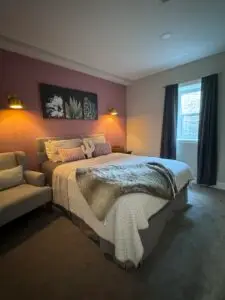
If the basement bedroom’s primary job is hosting visiting family and friends, the goal is different from a primary or kids’ bedroom — you’re designing a space that feels like a real bedroom, not an afterthought in an unfinished basement.
Make It Feel Like a Bedroom, Not a Repurposed Storage Room
The biggest difference between a guest suite that feels intentional and one that feels like leftover space is attention to the details that signal “this room was designed,” not “this room was available.”
- A real closet, even a modest one, makes an enormous difference. Guests need somewhere to unpack, not just a suitcase on the floor.
- Adequate natural light — egress windows do double duty here, providing both safety compliance and daylight that makes the room feel like a genuine bedroom rather than a converted basement corner.
- Proper ceiling height and finish — the same drywall and ceiling standards as the rest of your finished basement, not a lower-effort treatment because “it’s just the guest room.”
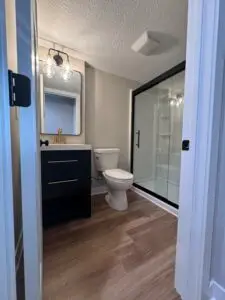
Ensuite or Nearby Bathroom
If your basement layout allows it, a nearby or ensuite bathroom is the single biggest upgrade you can make to a guest suite. Guests — especially overnight or multi-night visitors — value privacy and convenience, and not having to go upstairs in the middle of the night matters more than people expect. If a full bathroom isn’t feasible, even a basement half-bath nearby significantly improves the guest experience.
Temperature and Comfort Control
Basements run cool, and guests aren’t always used to that. If possible, give the guest suite its own thermostat zone or at least make sure the HVAC distribution to that room is generous. A guest who’s cold all night doesn’t remember the nice paint color — they remember being cold.
Sound Privacy
A guest suite benefits from the same acoustic treatment we’d recommend for a home office: insulation in the ceiling assembly, a solid-core door, and weatherstripping. Guests appreciate not hearing every footstep from upstairs, and the rest of the house appreciates not hearing every conversation from the guest room.
Furnishing for Flexibility
A guest suite gets used intermittently, which means it’s worth designing for flexibility. A queen or full bed (rather than a king) gives you more room layout options. A daybed or sleeper sofa option lets the room double as a sitting area or home office when guests aren’t there. Built-in or simple furniture that doesn’t overcommit the room to a single use keeps your options open.