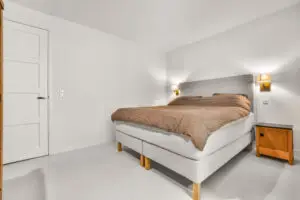
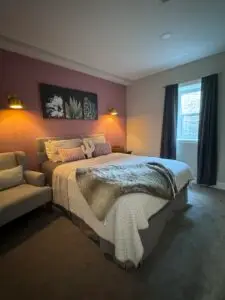
A basement bedroom is one of the most valuable additions you can make to your home — it adds genuine living space, increases functional square footage, and can serve a different purpose depending on what your family needs. A guest suite for visiting family. A bedroom for a teenager who wants more independence. A flexible room that’s a playroom now and a bedroom later.
But a basement bedroom isn’t just a finished room with a bed in it — it has to meet code requirements that other rooms don’t, and getting those requirements right from day one prevents real headaches down the road. Here’s what you need to know, whatever the room ends up being used for.

Part 3: Designing a Kids’ Bedroom in the Basement
A basement bedroom for a kid or teenager is a different design problem — durability, safety, and room to grow matter more than guest hospitality.
Safety First
Egress requirements matter even more here — a child’s bedroom without a proper escape route is a real safety concern, not just a code technicality. Make sure the egress window is appropriately sized and the window well (if below grade) has a permanent ladder for easy climbing.
Outlet covers, cord management for blinds, and rounded edges on built-in furniture are worth considering for younger kids. For older kids and teens, the focus shifts to durability and personalization rather than safety-proofing.
Durability Over Delicacy
Kids’ rooms take more wear than almost any other room in the house. A few practical choices make a big difference:
- LVP flooring stands up to spills, scuffs, and the general chaos of a kid’s room far better than carpet, while still feeling warm underfoot with an area rug layered in
- Durable, washable paint (eggshell or satin rather than flat) makes scuffs and marks easier to clean
- Built-in storage — a closet system, built-in shelving, or a window seat with storage underneath — gives kids a place to put things away, which makes the room easier to keep functional
Room to Grow
A basement bedroom for a child is often a longer-term investment than a typical kids’ room — basement bedrooms are frequently given to older kids and teenagers who want more independence and space, and the room needs to work for several years of changing needs. Avoid overly theme-specific built-ins or finishes that a 7-year-old loves and a 14-year-old will want changed. Neutral wall colors, flexible furniture layouts, and built-in storage that works for both toys and later for desks and personal items age well.
A Desk or Study Space
If the basement bedroom is for a school-age kid or teen, plan for a desk and adequate task lighting from the start. Good lighting at a study area, combined with a dedicated outlet for a lamp and any electronics, makes the room functional for homework and not just for sleeping.
Sound Considerations
Teenagers especially benefit from the natural sound separation a basement bedroom provides — and parents benefit from not hearing music or video calls through the floor. The same acoustic principles apply here as elsewhere: ceiling insulation, a solid door, and weatherstripping make a noticeable difference for everyone in the house.
What’s Common to All Three
Regardless of who’s using the room, every basement bedroom we build follows the same core standards:
- Steel stud framing that won’t warp, swell, or feed mold growth in a below-grade environment
- Proper insulation on exterior walls, so the room stays comfortable year-round rather than cold and clammy half the year
- Licensed electrical and HVAC work done by trade partners, not generalists — egress windows, smoke detection, and heating distribution all need to be done to code, not just to look right
- Full permitting and inspection so the finished room is a legitimate bedroom on paper, not just in appearance